Pulumi logo

Posts Tagged ai

Stop Tuning Prompts. Build a Harness.

Stop Tuning Prompts. Build a Harness.

Anthropic shipped a piece earlier this month called How Claude Code Works in Large Codebases. I have not read anything more useful about coding agents this year. The core claim, in their words: “the ecosystem built around the model—the harness—determines how Claude Code performs more than the model alone.” In my phrasing: in a real codebase, the model is the smaller variable. The layer of context and tooling you wire around the agent matters more than which version of Sonnet or Opus is behind it.

The post stays high-level, which is the right move for a launch piece. What I want to do here is land it. Same seven pieces, but with the wiring you would actually put in a repo, in the order I would put it.
Read more →

Best AI Infrastructure Tools in 2026

Best AI Infrastructure Tools in 2026

The phrase “AI infrastructure” now means two different things. One is the GPUs, schedulers, and MLOps platforms that exist to run AI workloads. The other is AI that runs infrastructure: agents and assistants that generate, deploy, and govern cloud resources on your behalf. They’re different markets with different vendors, and most teams need to think about both.

Read more →

Neo, Now in the Terminal

Neo, Now in the Terminal

Since launching Pulumi Neo, over 4,500 organizations have used it to delegate real infrastructure work: scaffolding, migrating, investigating, operationalizing, and more. Though that usage has come entirely through Pulumi Cloud, we know a large portion of Pulumi users live in the terminal, and increasingly that’s where AI tools run too. Now we’re bringing Neo there.

pulumi neo brings the same Neo experience you’ve had in Pulumi Cloud to your terminal. Running locally means there’s no separate branch to push, no credentials to provision, and no context to paste: Neo picks up the setup you already have.

pulumi neo working through a Kubernetes cluster check, with Flux GitOps state verified and a TODO list in progress

Read more →

Neo Integrations: MCP Servers and Cloud CLIs

Neo Integrations: MCP Servers and Cloud CLIs

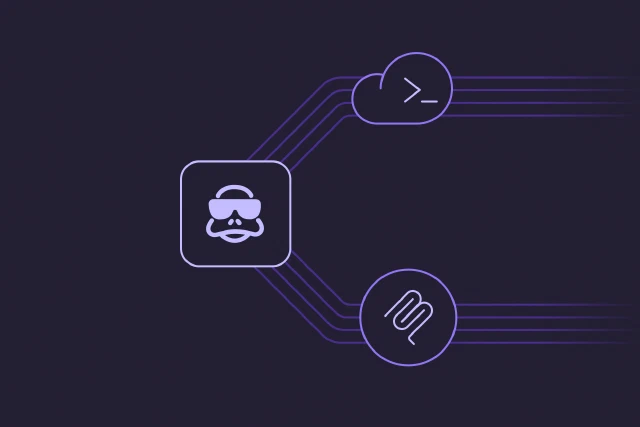
Pulumi Neo already understands your infrastructure: your code, your stacks, your state. Today we’re launching new capabilities that extend Neo’s reach in two directions: into the third-party systems your team uses to plan and observe, and out to the cloud CLIs that actually drive your infrastructure.

The first half is MCP integrations: connections to Atlassian, Datadog, Honeycomb, Linear, PagerDuty, and Supabase that show up as tools Neo can call during a task. The second half is CLI integrations: scopable access to aws, gcloud, az, and kubectl. Both are configured once at the org level and available to every Neo task in the organization.

Read more →

Ten More Things You Can Do With Pulumi Neo

Ten More Things You Can Do With Pulumi Neo

Last fall, after launching Pulumi Neo, we wrote up 10 things you could do with it. In the months that followed, as platform teams handed Neo more real work, we watched and listened, shipping a steady stream of features like plan mode, read-only mode, AGENTS.md, an integration catalog, cross-cloud migration, and task sharing. With today’s release, Neo extends beyond the Pulumi Cloud console into the Pulumi CLI, GitHub, and Slack.

So here are 10 more things you can do with Neo.

Read more →

The Agentic Infrastructure Era

The Agentic Infrastructure Era

The first frontier agents excelled at was coding. The reason is evident: we have billions of lines of self-documenting code available on the internet for the LLMs to learn from. We can measure their performance on coding thanks to linters, type checkers, compilers, and test suites. The most advanced agentic systems to hit product/market fit have been coding-oriented, and it has resulted in an intense velocity increase in how much and how fast code we can write.

But as the AI tsunami whips up reams of code, what happens to it becomes just as critical. As an industry, we’ve moved beyond just coding to engineering, which includes documentation, tests, automation, and, yes, managing the very infrastructure our applications need to run. The deeper into production you go, however, the less good agents naturally are at helping. At Pulumi, we live and breathe infrastructure, and have seen this firsthand. But we’ve also been hard at work building the platform this new era runs on. In this post, I’ll share our point of view, what we’ve built, what we’re launching today, and why all infrastructure is about to be agentic.

Read more →

How Building AI Agents Has Changed in 2026

How Building AI Agents Has Changed in 2026

Twelve months ago, building an AI agent meant picking a framework, defining your tools, standing up a RAG pipeline, and writing a stack of glue code to wire it all together. That was the default playbook. The post-mortem on six months of work usually went the same way: half the time went into infrastructure that had nothing to do with the agent’s actual job.

That isn’t where the work is anymore. Most of the middle layer is gone. The SDKs ship with the tools, the skills system replaced the upfront tool registry, and longer context windows pushed vector search out of the default slot it held all of last year.

The shape is the same as a lot of infrastructure shifts before it. The hard thing got cheap, the cheap thing got expected, and the question moved up a level.

Read more →

The infrastructure as code platform for any cloud.