Pulumi logo
Christian Nunciato

Christian Nunciato

Senior Technical Content Engineer

Introducing pulumi do: Direct Resource Operations for Any Cloud

Introducing pulumi do: Direct Resource Operations for Any Cloud

Infrastructure as code is the right model for production systems. State tracking, drift detection, and repeatable deployments all matter when you’re managing real workloads.

But sometimes, you also need a quick, one-off interaction with the cloud: create a bucket or a database, look up a VPC, delete a stray resource.

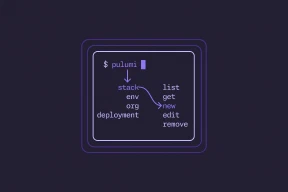
Today we’re introducing pulumi do, a new command for direct resource operations. With pulumi do, you can create, read, update, delete, and query any cloud resource from the terminal with a single command, across thousands of Pulumi-supported providers — no project, code, or state required.

Read more →

Better CLI Interactions for Agents and Humans

Better CLI Interactions for Agents and Humans

AI agents do a lot of their work through CLIs. They’re easier to call than HTTP APIs and they produce predictable output. Over the last few months our own CLI traffic has shifted from mostly people typing commands to people and agents running commands together, often in the same session.

Today we’re shipping a release built for both. The Pulumi CLI is reorganized around three ideas: the right command should be the one you can guess, anything you can do in Pulumi Cloud should also be doable from the terminal, and what comes back should be just as readable to an agent as it is to a person.

Read more →

CDKTF is deprecated: What's next for your team?

In July, 2020, CDK for Terraform (CDKTF) was introduced, and last week, on December 10, it was officially deprecated. Support for CDKTF has stopped, the organization and repository have been archived, and HashiCorp/IBM will no longer be updating or maintaining it, leaving a lot of teams out there without a clear path forward.

For most teams, that means it’s time to start looking for a replacement.

It’s an unfortunate situation to suddenly find yourself in as a user of CDKTF, but you do have options, and Pulumi is one of them. In this post, we’ll help you understand what those options are, how Pulumi fits into them, and what it’d look like to migrate your CDKTF projects to Pulumi.

Read more →

Next-level IaC: Drop those wrapper scripts and let your language do that for you

Our users are always telling us (particularly the ones who come to Pulumi from other IaC tools) that being able to use general-purpose languages to manage their infrastructure was a game changer for them.

I know it was for me. As a JavaScript developer, when I discovered Pulumi and saw that I could do pretty much everything I was doing with Terraform but with TypeScript, I was immediately hooked; that’s all it took. Just being able to write my resource declarations in a language I knew well (and that my IDE understood) was huge.

Read more →

Local Testing With Pulumi

If you’ve been following along with our IaC Recommended Practices series, then you’re already familiar with Zephyr Archaeotech Emporium, the fictional company at the center of the series. Today, you’ll get an inside look at how Zephyr starts using Pulumi for locally testing the application code for their online store and accelerating the inner dev loop for their development team.

Read more →

IaC Best Practices: Structuring Pulumi Projects

This is the third post in a series of blog posts focused on Zephyr Archaeotech Emporium—our fictional company—and their use of Pulumi to manage their online retail store. In the first post, you saw how Zephyr initially decided to go with a single Pulumi project for managing deployments of their online retail store application. In this post, you’ll see how Zephyr’s use of Pulumi changes as their company grows and evolves.

Read more →

IaC Best Practices: Enabling Developer Stacks & Git Branches

In the first post about code organization and stacks, we introduced Zephyr, a fictional company that uses Pulumi to manage its online retail store. Following on from that post, which discusses code organization and stacks, this post explores two more questions users frequently ask when working with Pulumi in teams — namely, How can I best enable multiple developers to collaborate on a Pulumi project? And how can I use Git and Git branching to support this kind of collaboration? In this post, we’ll provide some guidance and best practices around these topics, using Zephyr and its online store as the use case.

Read more →

IaC Best Practices: Understanding Code Organization & Stacks

This is the first in a series of blog posts that explores how a fictional company—Zephyr Archaeotech Emporium—uses Pulumi to manage their online retail store. This post explores a couple of common questions that users ask when working with Pulumi; specifically, where should I store my Pulumi code? And how do I support multiple environments with Pulumi? This post will provide some guidance and Infrastructure as Code best practices around these topics, using Zephyr and their online store as the use case.

Read more →

How To Build An ETL Pipeline With Amazon Redshift & AWS Glue

In our last episode, Deploying a Data Warehouse with Pulumi and Amazon Redshift, we covered using Pulumi to load unstructured data from Amazon S3 into an Amazon Redshift cluster. That went well, but you may recall that at the end of that post, we were left with a few unanswered questions:

  • How do we avoid importing and processing the same data twice?
  • How can we transform the data during the ingestion process?
  • What are our options for loading data automatically — for example, on a regular schedule?

These are the kinds of questions you’ll almost always have when setting up a data-processing (or ETL) pipeline — and every platform tends to answer them a little differently.

Read more →

How to Create and Share a Pulumi Template

Last month, we released our first set of architecture templates — configurable Pulumi projects designed to make it easy to bootstrap new stacks for common cloud architectures like static websites, containers, virtual machines, and Kubernetes clusters. Architecture templates are a great way to get a new project up and running quickly, and they’ve already grown quite popular with our users, several of whom have asked if whether it’s possible to create templates of their own.

Read more →

The infrastructure as code platform for any cloud.